
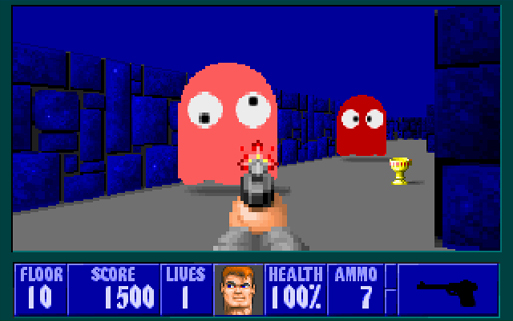
In old Mario games there are hidden boxes that give you bonuses. If you’re jumping and you hit one, it will appear out of thin air. So you think, “Woah! I found a secret, cool!”. Wolfenstein had this sort of secret as walls that turn out to be secret doors. These are the types of game that made me love secrets, it can be really exciting to find something you’ve never seen before. It’s also fun to be “in the know” about the secret stuff in your favorite game, you can tell newbies about that machine gun on the first level, or that whistle that lets you skip all those levels.
Totally hidden stuff seems like a cool idea, but the inclusion of anything in a game, even a cool secret, can potentially cause problems. The problem with totally hidden stuff, for example: Hidden walls/boxes force you to check everywhere if you want to find everything. Regardless of whether it’s an optional secret or not, when you find a secret door that looks like every other wall, you will feel the temptation to look for more. This means pushing up against every wall, jumping on every tile, pressing down on every green pipe. That’s not really very fun. Those platformer levels that have something special hidden if you start out going left instead of right fall into this category as well. It forces me to try going left every single time.
Secrets Can Hurt Or Help
So how do you do secrets then? I think a secret should be something that’s easy to miss, but not impossible to detect. For example if you want a push wall secret, make the wall look slightly different. Or maybe there’s a computer beeping in the room behind the wall, and you can track down the location of a secret door based on sound. Doom had a couple places where you could hear a secret door open somewhere out of view when you press something or step on a certain tile, this is a cool way to make a detectable secret. If you do secrets in a way that the player can master, they become less about repetition and googling, and more about exploration.
Another good kind of secret is the kind where the reward is visible to the player but out of reach. Earthworm Jim has lots of spots like this, a life or a gun somewhere you can’t get to. These secrets require you to use the game mechanics in a clever way, or explore the level better to figure out a path to reach the item. They can even just be a reward for doing something tricky, like swinging through a maze of spikes. In this case the path is no secret, it’s in plain sight, but it’s obviously not an easy path. The player will see a life in a risky area and think, “Am I good enough to get that life without losing one, or should I play it safe?”. There’s a real sense of reward when you take that risk and pull it off.

One more detail is that you might not want to let players “farm” your secrets. If you can farm something, that means you can do some repetitive action to get as many of it as you want. For example, imagine you have 3 secrets in your level that each give the player a life. If you respawn those lives after every death, then the player has the option to die on purpose and run through the level again. They lose 1 life, but they gain 3 lives from your secrets. Same goes for powerups/coins/what have you. Some people like farming, and you may want to include it in your game. I personally don’t appreciate when games that offer repetitive options for winning.
Secrets as an Actual Mechanic
Some games might give a visual indicator of how many secrets you found. Some even use secrets as more than just bonuses, and instead require you to find a number of secrets to progress through the game. A good example of this is James Pond 3. In it, every level has 4 teacups that you need to find before a level is properly completed. You can usually finish a level without finding all the teacups, but sometimes teacups are accompanied by map pieces that allow you to reach important areas on the world map. Some levels actually do require you to find all the teacups to activate the exit. These levels are a good way to introduce hidden map pieces, which shows the importance of exploration to the player. Often these teacups are hidden in tricky places, levels with less secrets just put their teacups out in the open.
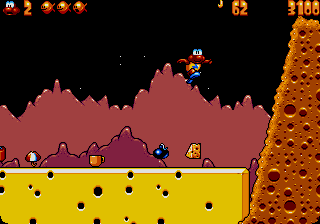
Something like this can be good even if it doesn’t factor into completing the game. The benefit of this teacup mechanic is that it gives the game a good way to tell the player their progress finding secrets in a level. Teacups can be put in tricky/hidden places, and can be accompanied by lives, powerups, secret level keys, etc. If the player has found all 4, then they know they don’t need to screw around trying to find things they missed. You could even have a variable number of teacups per level, but I’d recommend indicating this to the player. Some levels might not have room for secrets, placing 4 teacups in a tiny level might feel more like an obligation than an improvement.
Doom had a literal secrets found percentage shown at the end of the level for this, which is a step in the right direction but is a bit too raw to be a good indicator. If it says you found 30% of the secrets, what does that mean exactly? “Is that 1 secret? 3 secrets? How many secrets did I get again, maybe I can do the math and figure out exactly what 30% means.” Probably best if you’re gonna do a number, say 3/5 or something like that. Or just always have X number of secrets. The important thing is giving players enough indication that they don’t need to go feeling up all the walls in every level unless they’re really stuck.
Secrets That Skip Fun
Finally, there are secret things that give you a huge advantage. One example are the warp whistles in Super Mario Bros 3, which allow you to completely skip entire levels. This can be really cool, this is where people who know everything about a game can really shine. But, be careful. There are a few things that can go wrong with high impact secrets like this.
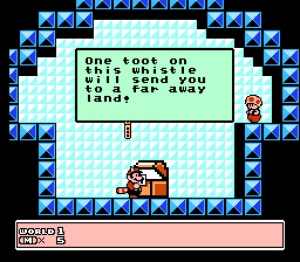
One problem, is that these secrets can allow expert players to spoil the game for others. Imagine you’ve been struggling through a game only to watch some pro play through using all the secrets and skipping everything you had trouble with. It makes what you’ve been doing seem a bit futile, and some people get tempted to just go to google to figure out the “right”(quickest) way to pass the game. The path where you use all the crazy game breaking secrets usually isn’t the funnest path through the game, it’s *supposed* to be for people who already passed it, right?
Another problem comes from finding a huge secret by accident. If you absolutely must have a big game changing secret, make sure you REALLY hide it. If a player is having fun with your game only to randomly find the item that gives them infinite health, or warps them to the final boss, this can really wreck the game. A recent example of this going wrong is in Super Mario 3D World. In one world, there is a secret in a level that immediately skips you ahead a world. The secret is not very hidden at all, it’s very easy to enter by accident. It can be a frustrating experience to suddenly be shown a brand new world ahead of a ton of stuff you even seen yet. This might be nice for some people, but if it happens without any effort required, it just reminds me of using cheats or game genie. If your game is gonna skip levels, make sure the player really has to go out of their way to make it happen.
Please Be Careful With Secrets
When done correctly secrets can be more than just extras for people who bothered to push on every wall. They can improve the quality and replayability of your game, make exploring levels fun, and give the game a sense of mystery. But, secrets can also mess up the experience if they’re not done correctly. They can introduce repetition and bugs that hurt the game. So if you plan to have secrets in your game, make sure you consider the effect they will have.